
If you’ve ever heard someone say they “make six figures” or have a “seven-figure net worth,” it sounds impressive—but what does it actually mean in real dollars?
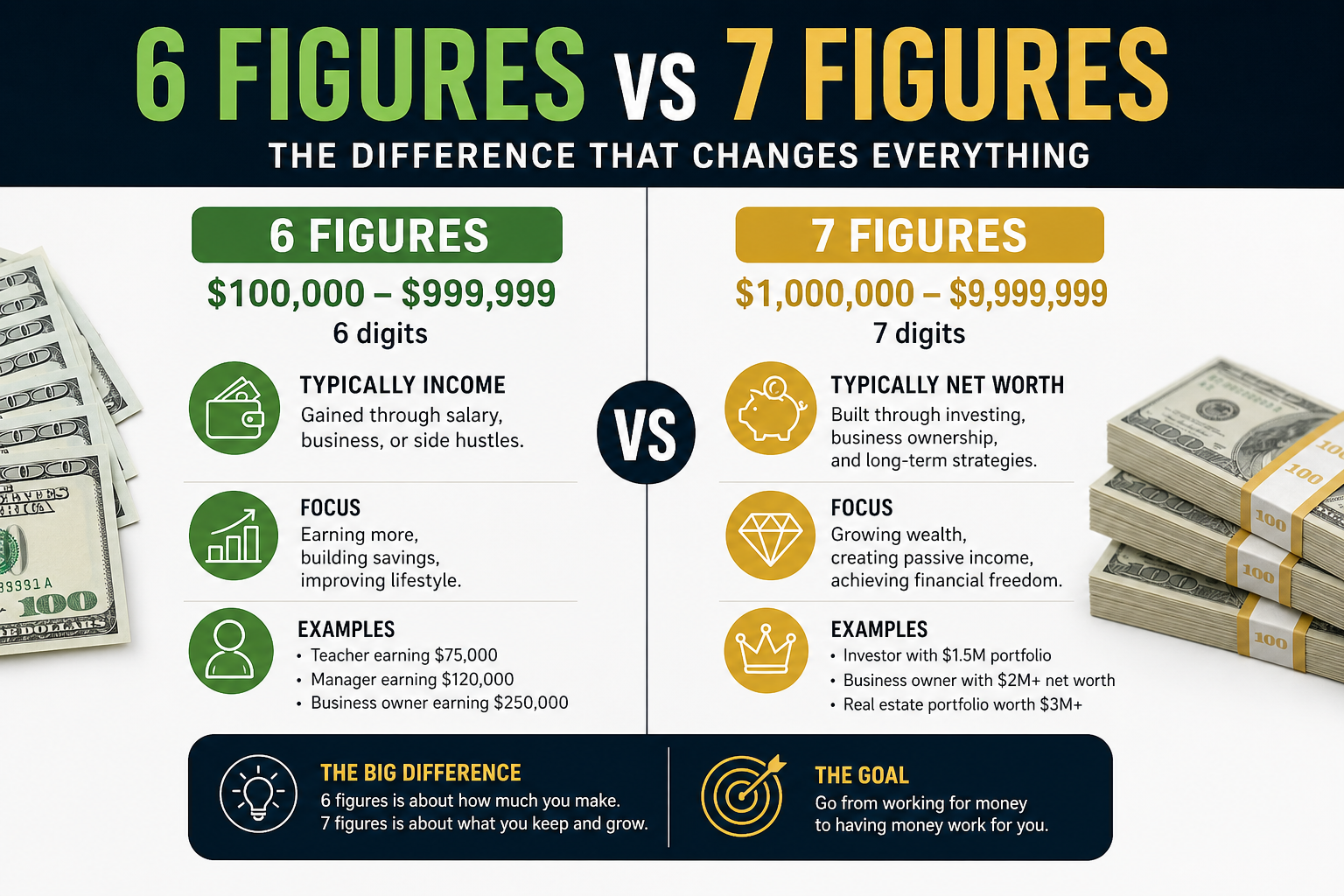
A six-figure number is anything from $100,000 to $999,999.
A seven-figure number starts at $1,000,000 and goes up to $9,999,999.
That one extra digit represents a major financial shift—not just in income, but in lifestyle, savings potential, and long-term wealth.
What Is 6 Figures?
A six-figure amount means the number has six digits total.
That includes:
- $100,000 (entry-level six figures)
- $250,000 (mid-range)
- $999,999 (top of six figures)
Most often, people are referring to salary when they say “six figures.”
Real-world examples:
- A doctor, lawyer, or senior-level employee earning $120,000/year
- A dual-income household earning a combined $180,000
- A business owner bringing in $300,000 annually
Crossing into six figures is widely considered a major financial milestone, especially in terms of income.
What Is 7 Figures?
A seven-figure amount means the number has seven digits total.
That includes:
- $1,000,000 (starting point)
- $2,500,000 (mid-range)
- $9,999,999 (top of seven figures)
At this level, the conversation often shifts from income to net worth.
Real-world examples:
- A homeowner with significant equity and investments totaling $1M+
- A business owner whose company generates over $1 million annually
- An investor with a diversified portfolio worth several million dollars
Seven figures represents true wealth accumulation, not just high earnings.
6 Figures vs 7 Figures: The Real Difference
The jump from six to seven figures isn’t just “one more digit”—it’s a completely different financial position.
Key differences:
Income vs Wealth
- Six figures = typically income-focused
- Seven figures = usually net worth or assets
Financial Stability
- Six figures allows comfort and flexibility
- Seven figures provides long-term security and leverage
Lifestyle Impact
- Six figures can support a comfortable lifestyle depending on location
- Seven figures opens the door to investment income, early retirement options, and greater financial freedom
Wealth Building Power
- At six figures, you build wealth
- At seven figures, your wealth starts working for you
How People Reach 6 Figures
Most people reach six figures through earned income.
Common paths include:
- Advancing in a high-paying career (healthcare, tech, law, finance)
- Building a business or side hustle
- Combining two strong incomes in a household
- Strategic job changes and salary negotiation
Education can still play a role, but it’s not the only path. According to the U.S. Bureau of Labor Statistics, higher-paying roles tend to cluster in specialized or in-demand fields.
How People Reach 7 Figures
Seven figures is rarely achieved through salary alone—it typically requires accumulation and strategy over time.
Common ways people reach this level:
- Long-term investing (stocks, retirement accounts, real estate)
- Business ownership and scaling revenue
- Consistent saving combined with compound growth
- Equity in property or companies
For a deeper breakdown of how money grows over time, see our guide on where your money actually goes each month.
Why This Distinction Matters
Understanding the difference between six and seven figures helps you:
- Set realistic financial goals
- Measure progress beyond just income
- Shift focus from earning to building long-term wealth
Many people aim for six figures—but the real transformation happens when you start thinking in terms of net worth and assets, not just salary.
The Bottom Line
- 6 figures = $100,000 to $999,999
- 7 figures = $1,000,000 to $9,999,999
Six figures is a strong income milestone.
Seven figures is a wealth milestone.
One gets you comfortable.
The other gives you options.